
Equity News Magazine
Equity News is the official magazine of Actors' Equity Association. Equity News has been around in a variety of formats since 1915.
Theatre Spotlight: Native Voices
by Gabriela Geselowitz
by Gabriela Geselowitz

Native Voices is the only Equity company in the country that specializes in developing new works by Native writers. More than that, Native Voices exemplifies what it means to create theatre as a community, seeking out new talent and encouraging artists to leave their comfort zones and try something new in order to tell stories.
"We're trying to indigenize theatre as we know it," said DeLanna Studi, a citizen of the Cherokee Nation and Equity member who serves as Artistic Director for Native Voices.
Native Voices began as a small theatre festival in 1994 out of Illinois State University, founded by married theatre artists, Equity member Jean Bruce Scott and Choctaw member Randy Reinholz. In the beginning, it was difficult to even find works written by Native playwrights, let alone a full company and creative team. (At Native Voices, Native refers to groups of people who lived in North America or Hawaii pre-European colonization, many of whom have treaties or other formal relationships with the U.S. government: First Nations, Alaskan Native, Native Hawaiian or American Indian.)
Over time, the founders made connections and gradually formed a network of artists. After five years in Illinois, they came out to Los Angeles to begin a partnership with the Autry Museum of the American West, which has a 200-seat auditorium. Over the next several years, Native Voices produced more and more theatre. It began its relationship with Equity in 2013, and it currently operates on Letters of Agreement or the Small Professional Theatres Agreement. While the theatre usually mounts one mainstage show per season, their structure of producing a lot of readings and festivals of short plays favors more opportunities to develop new works.
At the start of 2020, the theatre founders were ready to retire and pass their project on to the next generation. Studi, who had worked on several Native Voices productions and credits the theatre with her own development as an artist, took on the mantle of artistic director. COVID hit three weeks later.
"Because we were in survival mode, [at first] we didn't get to dream big," said Studi. But the shutdown soon revealed the opportunity to connect with Native artists all across the country. After all, a lot of the work Native Voices does is nurturing young or new artists, planting the seeds for a stronger creative network many seasons down the line. And one unexpected side-effect of COVID lockdowns was that many reservations got internet for the first time, increasing accessibility.
The company ran (and will soon resume) a remote playwrighting workshop for Native middle and high school students. The program culminated in Native Voices holding online readings of these works, compensating the young writers. In addition, the company's director mentoring program is in its third year; Studi knows of only one or two Native creatives in the entire U.S. with a directing MFA.
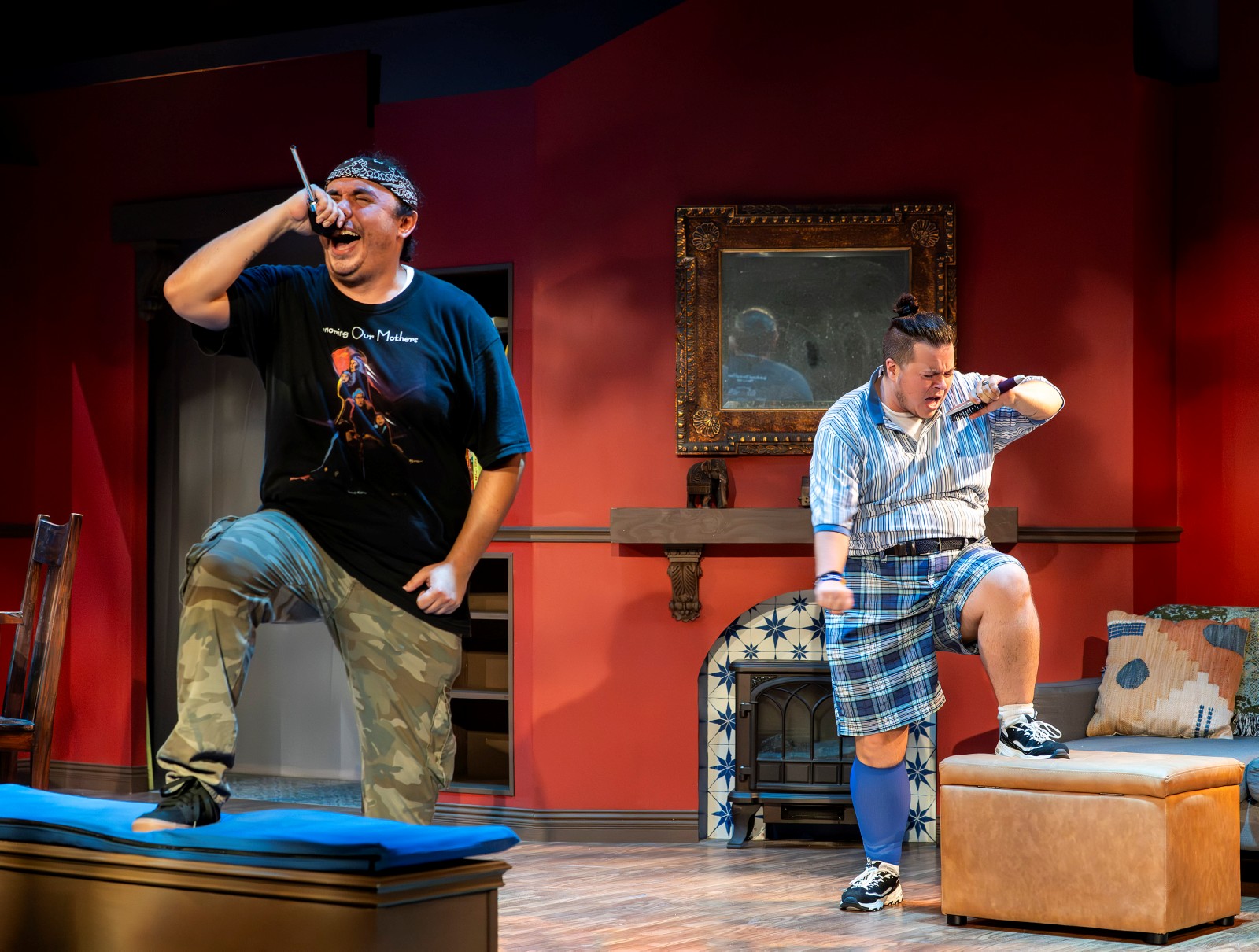
Equity member Kholan Studi (left) and Maddox Pennington in Haunted by Tara Moses (Seminole Nation of Oklahoma). Craig Schwartz Photography.
"We want to make sure we create that pathway for Native theatre artists who don't have that luxury of going to school for the arts," she said.
That can also mean teaching the artists in their midst to take on new roles. Equity member and Mississauga First Nations member Jennifer Bobiwash was new to Los Angeles in 2003 and attended a show at Native Voices. A woman who turned out to be Jean Bruce Scott approached her afterwards and asked if she was Native. The two got to chatting, and Scott asked Bobiwash to audition. To Bobiwash's surprise, the company ended up hiring her as a stage manager for a reading, teaching her how to do it on the job and offering continuous support.
"I'm grateful and thankful I learned that way because I didn't have any limitations that way," said Bobiwash.
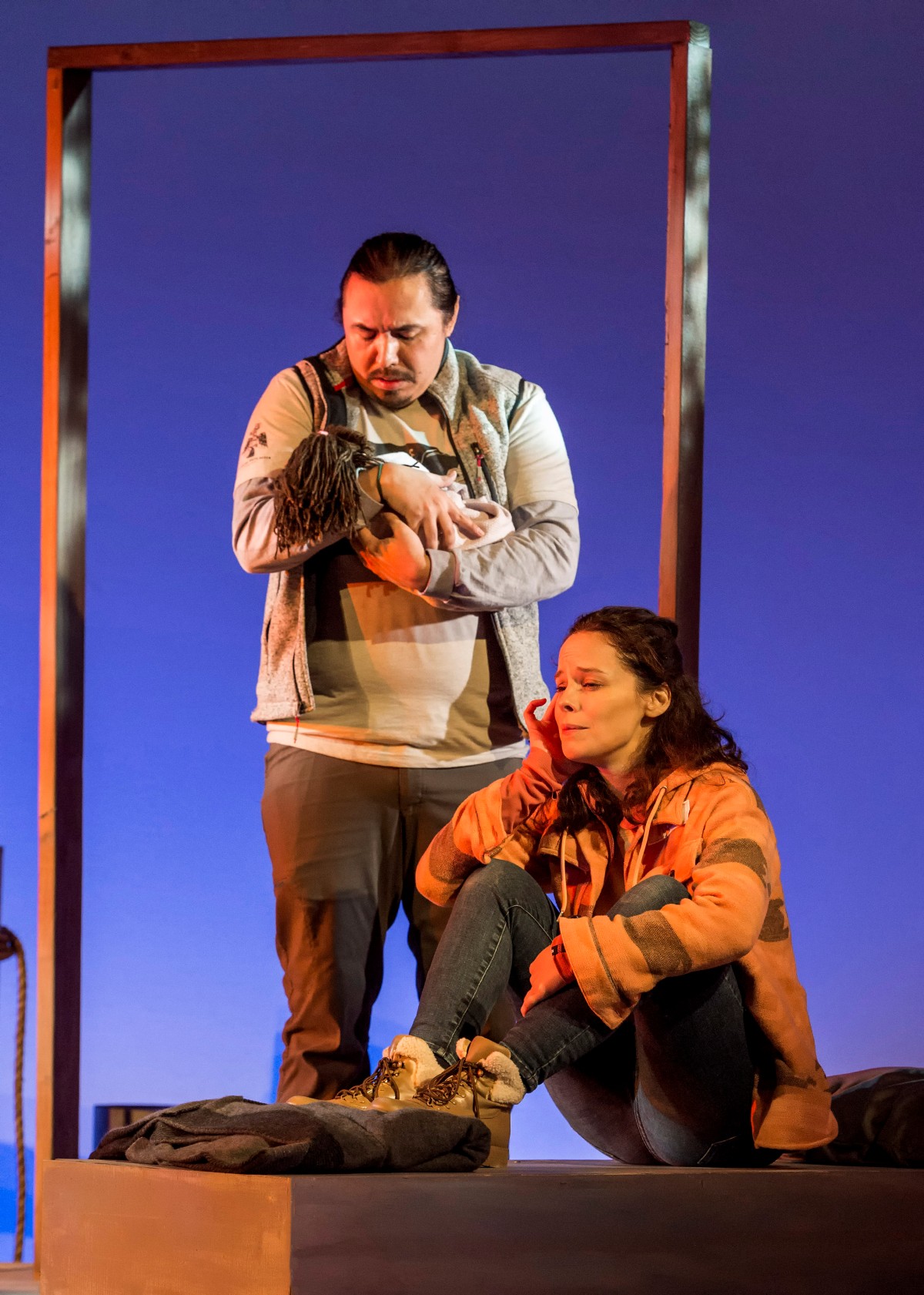
Equity members Kholan Studi (left) and Josephine Keefe in Where the Summit Meets the Stars by Frank Henry Kaash Katasse (Tlingít). Craig Schwartz Photography.
Since then, Bobiwash has worked on dozens of productions at Native Voices, in a variety of different roles, on Equity contract for stage managing and acting alike, and also as a playwright developing her own work there.
Equity member and member of the Kickapoo Tribe of Oklahoma Arigon Starr saw herself as a musician when she entered the orbit of Native Voices, but an acquaintance who was a trustee at the theatre encouraged her to audition, and to her surprise she began her acting career there. In addition, she is one of many artists at Native Voices who felt encouraged to try playwrighting, and the company has produced several of her plays. (She has also directed there and designed a show poster – once again, more opportunities to grow as an artist.)
Equity members who have also written plays produced at Native Voices have emphasized how supported they felt at all levels of production.
"We want to give artists the luxury of telling stories the way they want to tell [them]," said Studi. "Native stories do not fit the Aristotelian structure. We predate that structure... We will show you all the different sides to a story, but we don't tell you what the answer is. It's up to you to decide how the play ends... stories come back around because that's how we tell stories."
A play at Native Voices is also more likely to have ancestors as characters, or non-humans such as animals or mountains portrayed by human actors.
Equity member and Cherokee Nation citizen Kholan Studi (DeLanna's cousin) has worked on well over a dozen productions at Native Voices, first performing with them in 2014. Over the years, he says the company has become more ambitious, asking more of its audiences.
"They are actively choosing to do work that is a little more brutally honest, which I personally deeply appreciate," they said. "If audiences aren't in some way reckoning with themselves and their own place in society than I don't know why we're doing theatre."
"This theatre company has had the courage to let us tell our own stories, instead of presenting the tired Hollywood stereotypes audiences have come to expect," said Starr.
Because Native culture is itself so diverse, Native Voices often hires consultants from the specific communities portrayed in their productions. For They Don't Talk Back, a play about Alaska Natives, Native Voices took the cast to Alaska for a week to learn about the culture.
"The language, eating the food, fishing, those are amazing experiences that I don't think I would have had at another theatre company," said Bobiwash.
The theatre also hires psychologists who specialize in Native communities for plays that feature historic trauma or domestic abuse. And for the tightknit group of artists who return for show after show, the heavy topics feel less daunting when handled together.

Equity member Kholan Studi (left) and Erin Xáalnook Tripp in Antíkoni by Beth Piatote (Nez Perce). Grettel Cortes Photography.
"The emphasis is just community and understanding during workshops and productions," said Kholan Studi. "It's not to say other theatres don't take care, but when it's a Native group, you can just feel the difference."
The company extends its community efforts past the stage; management also showcases non-theatre Native artists when they can, by showing their visual art in a lobby or hiring a Native DJ to play before a show. And the company also plays an educational role, hosting talkbacks and bringing in school groups, as well as developing a curriculum for local schools that tie in with their mainstage productions.
For management at Native Voices, producing shows on Equity contract serves multiple purposes: It opens doors to funding, and it ties in strongly with the mission of making sure that Native artists are safe on the job.
"It's always important that our people are paid a fair wage and can get health insurance and a pension and are treated professionally," said DeLanna Studi. "There's something that just elevates your status in the theatre world" with an Equity membership.
Many actors with Native Voices are making their professional debuts, and earn their Equity cards on contract there, often going on to robust theatre careers. DeLanna Studi said it is common for young Native actors in Hollywood to get recruited right off the street, and employers often take advantage. Working on an Equity production teaches them as much about fair labor practices as it does about art.
"Even when they leave our theatre and go to other theatres, they know what their rights are," she said.
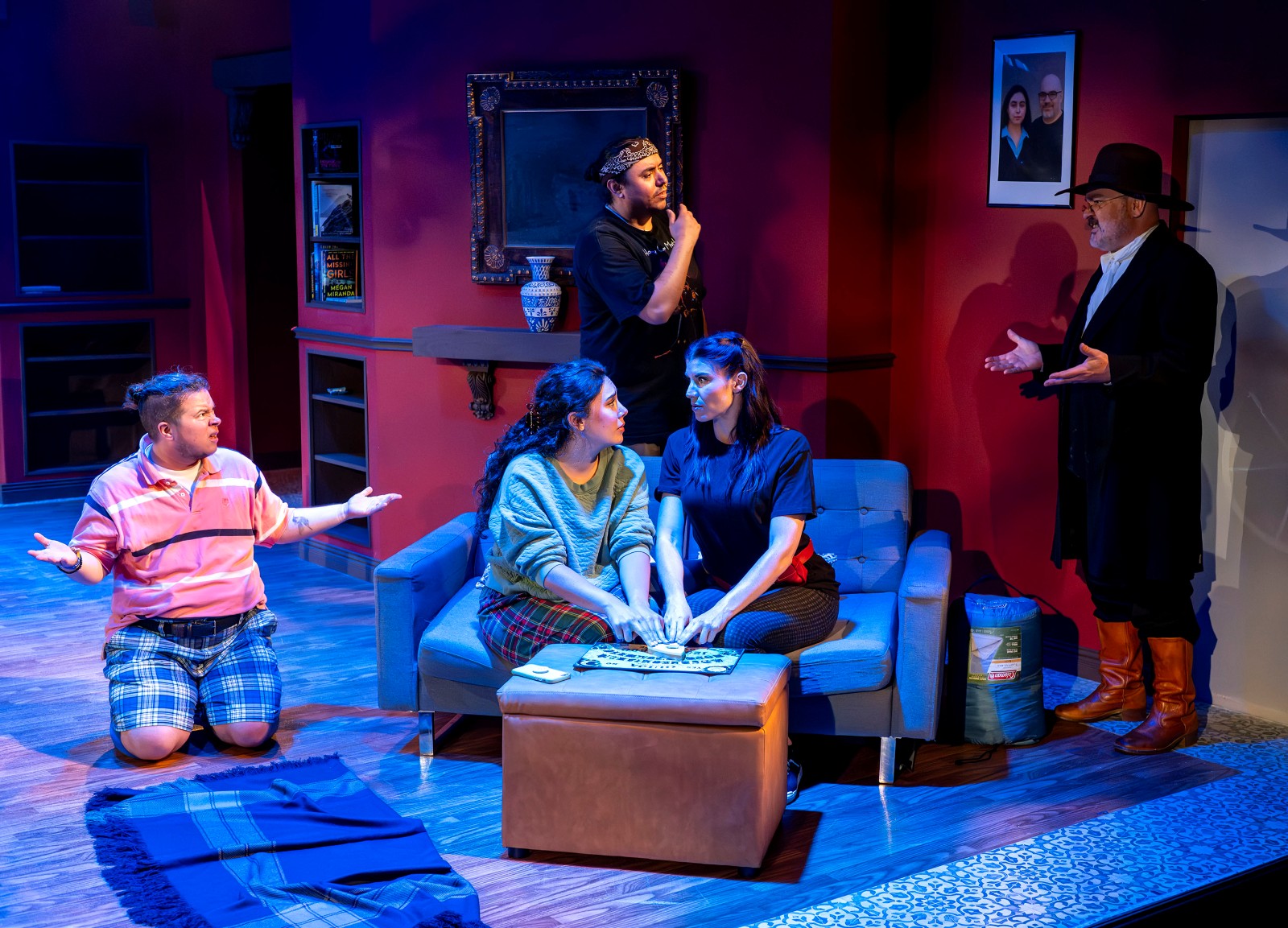
From left: Maddox Pennington, GiGi Buddie, Equity member Kholan Studi, Jen Olivares and Equity member James William Evans in Haunted by Tara Moses (Seminole Nation of Oklahoma). Craig Schwartz Photography.
"Working with Native Voices has given me a lot more confidence in working with other theatre companies," said Starr. "Having a theatre company that is a strong, nurturing space for our creativity ensures our stories and voices will continue for years to come."
And Native Voices wants more of just that – voices. While the theatre consistently draws in Native audiences, audition rooms can be sparser; they are always looking for new Native talent – onstage and back.
"If there are Native stage managers out there, please come to Native Voices!" Bobiwash said.
Bobiwash also noted that because of Native Voices's unconventional venue, the theatre has largely escaped notice of the larger Los Angeles theatre community in the past. That is finally starting to shift thanks to word of mouth, networking and resource sharing with other companies.
These connections are now more important than ever. At the end of this season, in June, Native Voices will take its final bow at the Autry. While the museum has championed the theatre, it is still recovering from COVID losses to its budget while Native Voices continues to grow. While details for the theatre's 2026–2027 season are yet to be announced, a lot of theaters around Los Angeles are excited to host the company next.
Kholan Studi calls Native Voices "small but mighty," confident that strength and resourcefulness will continue in its next chapter.
DeLanna Studi takes the theatre's mission very seriously, noting that the company has already made an impact on the industry; theatres all over the country call upon Native Voices regulars when creating Native content.
She also sees the work at Native Voices as a gift to her own childhood self, to tell these stories, and to empower more storytellers.
"If we're not doing the work," she said, "then no other Equity theatre is."
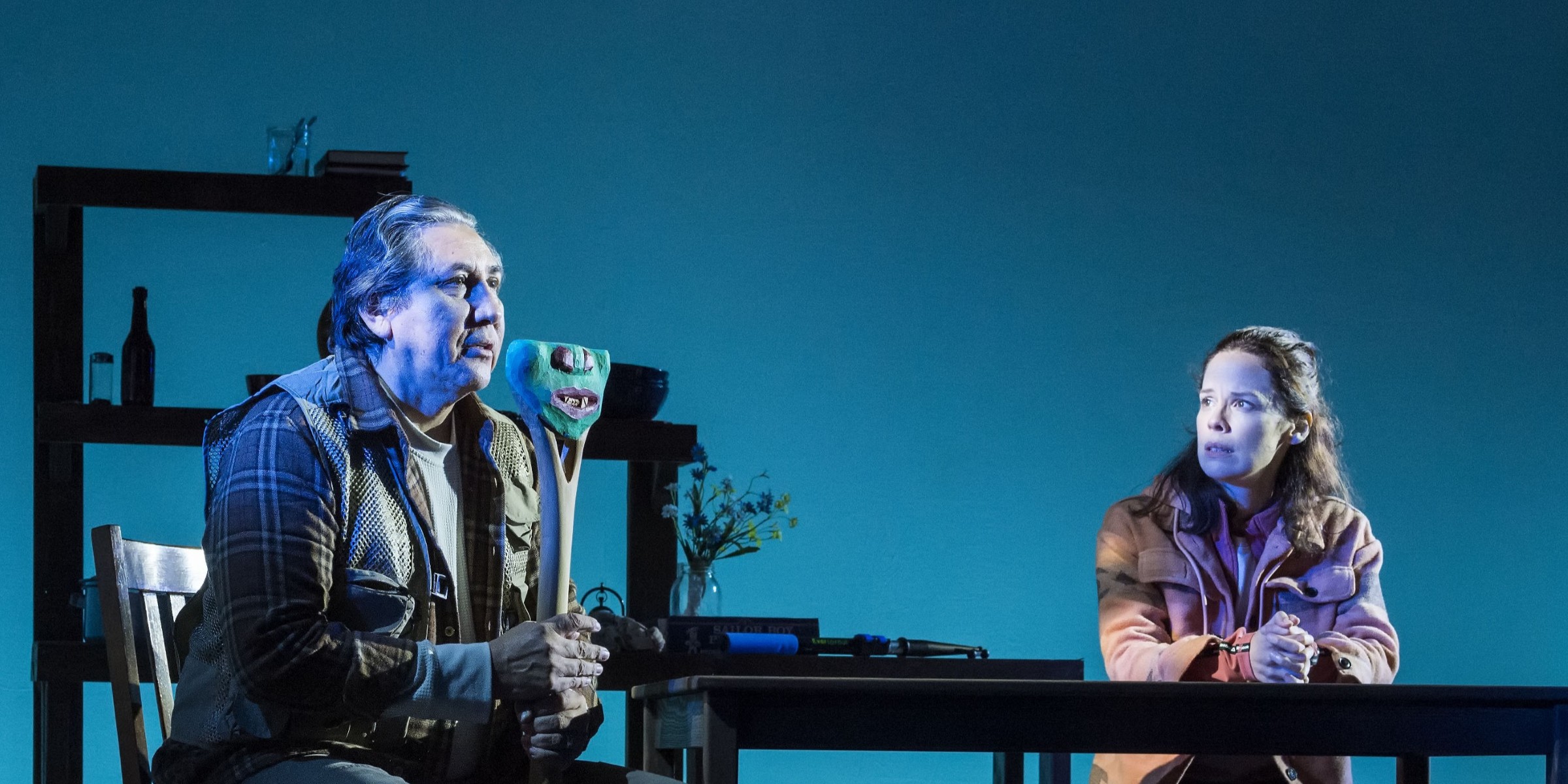
Banner: Duane Minard (left) and Equity member Josephine Keefe in Where the Summit Meets the Stars. Craig Schwartz Photography.
Leave a commentOrder by
Newest on top Oldest on top